
It’s 11 p.m., your lower back has been hurting since Tuesday, and you’ve just typed “best massage for back pain” into Google for the third time this week, only to land on a wall of options that all promise the same thing. Swedish. Deep tissue. Myofascial release. Lymphatic drainage. Every description sounds like it could be exactly what you need, and somehow that makes the decision harder, not easier.
I’ve watched this exact process play out in my clinic for nearly twenty years, ever since I started this work in Honolulu. Someone comes in, points vaguely at their shoulder or their lower back, and admits they have no idea what to book. And here’s the thing I tell almost every one of them: the right massage isn’t the most popular one on the menu. It’s the one that matches what your body actually needs.
At Makalani Holistic, I start with an assessment, recommend a treatment plan that helps you balance your mind, body, and spirit.
Why the Right Match Matters More Than the Massage Itself
Not all pain comes from the same place. Some of it is a muscle that’s simply overworked. Some of it is fascia, the connective web under your skin, holding a restriction that nothing else has been able to reach. Some of it is swelling your body hasn’t finished clearing after surgery. Each of those needs a different approach and technique built for one won’t necessarily touch the other.
According to the NIH, 10.9% of U.S. adults used massage therapy in 2022, more than double the 4.8% who used it back in 2002. Massage has moved from an “occasional treat” to a regular part of how people manage pain, making it crucial to understand which type of pain needs which type of massage therapy.
If Your Pain Is Deep, Constant, and Muscle-Based → Deep Tissue Massage
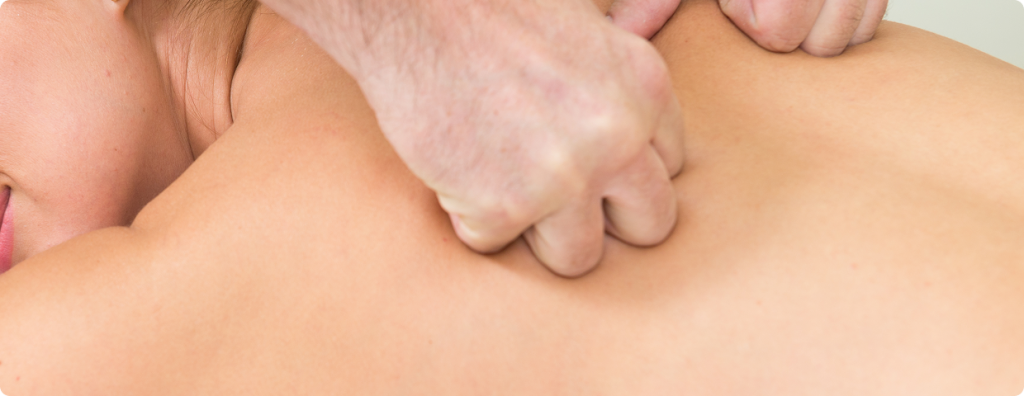
Stiff shoulders that never quite let go. A lower back that resets for a day and tightens right back up. An old injury that still flares when the weather changes. If that sounds familiar, Deep Tissue Massage is usually where I start.
People sometimes describe deep tissue as “a stronger Swedish massage,” and that’s not quite right. Swedish massage works the surface layers to encourage circulation and relaxation. Deep tissue goes after the muscle and connective tissue underneath, using slower, more deliberate pressure to work through patterns your body has been bracing into for months or years. Studies show that even a 60-minute massage done two to three times a week for four weeks, relieved chronic neck pain better than shorter or less frequent sessions did. Consistency, not just pressure, is part of what makes deep, muscle-based work effective.
During your 90-minute session, I’ll often bring in heat therapy, Gua Sha, or wood therapy as needed, but I’ll always ask about your desired outcome first, so the pressure and approach actually fit you.
If the Pain Won’t Go Away and No One Can Explain Why → Myofascial Release
This can be a tough one for most people to detect. Headaches that keep returning. A shoulder or hip that feels restricted rather than sore. Scans that come back clean while you’re still in pain every day. If this sounds like you, it’s probably fascial pressure.
Trauma, surgery, and inflammatory responses create fascial restrictions that can produce tensile pressure of approximately 2,000 pounds of pressure per square inch. That fascial pressure acts as a straight jacket on muscles, nerves, blood vessels, and osseous structures, producing symptoms of pain, headaches, and restriction of motion. The fascial web does not show on CT scans or MRIs, and it is very often missed by untrained physicians. A Frontiers study found that trigger-point work on the head and neck muscles may reduce the frequency, intensity, and duration of tension and migraine headaches, which lines up with what I see on the table almost every week.
During a Myofascial Release session, I use sustained 5- to 10-minute stretches, in tune with the fascia, paired with deep breathing. This kind of slow, attentive work promotes deep healing rather than a quick surface fix.
If You’re Recovering From Surgery or Dealing With Swelling → Lymphatic Drainage & Post-Op Care
Healing from a procedure is its own kind of pain: the tightness under a compression garment, the swelling that won’t quite move on, the discomfort of a body doing repair work you can’t see. This is where my training as a Certified Lymphedema Therapist and expertise in Pre & Post Surgery Care and Consultation helps you understand what your body needs before and after your procedure, so you go in prepared instead of anxious, and heal with a plan instead of guesswork.
Once you’re recovering, your Post-Op Lymphatic sessions bring in lymphatic drainage, lymphatic massage, garment fitting, and additional modalities, like Wood Therapy, Gua Sha, or heat therapy, depending on your healing phase.
If You’re Wired, Touched-Out, and Just Need to Reset → Hawaiian Lomi Lomi
Sometimes the pain isn’t structural at all. It’s the tension that comes from a body that’s been overworked: poor sleep, a clenched jaw and tense shoulders. If that sounds like you, a Hawaiian Lomi Lomi massage will fully reset your body. It’s a mind-body-spirit escape from Hawai’i (my hometown) and includes gentle stretching, deep or relaxing bodywork depending on your preference.
Lomi Lomi is a complete healing experience that restores the natural rhythm of the body, releases emotional tension, and invites deep peace to settle in. Warmed coconut oil and Hawaiian specialty music are woven into the experience. Clients often leave feeling both grounded and uplifted, as if their body and soul have been realigned.
How To Get Started
Every session at Makalani Holistic starts with a real conversation: where it hurts, what you’ve already tried, what you’re hoping this appointment does for you. From there, I choose the approach, sometimes one technique, sometimes a blend of two or three, that actually matches what your body is telling me.
Relief rarely comes from chasing the most popular treatment on a menu. It comes from matching the right technique to what your body is actually carrying, whether that’s a stubborn muscle, a fascial restriction, post-surgical swelling, or a nervous system that just needs permission to rest. That’s the heart of how I practice, mind, body, and spirit, treated as one connected system rather than separate problems.
If you’re ready to stop guessing and start healing with intention, book a session with me at Makalani Holistic, and we’ll figure out, together, exactly what your body needs.