
If you’ve ever lived with pain that scans can’t explain, you know how exhausting it gets. The chronic stiffness. The headaches that keep coming back. The shoulder that won’t quite let go, no matter how many stretches, foam rollers, or massages you try.
For years, the answer to chronic tension has been to push harder, stretch deeper, and grind through the discomfort. But experts are now questioning, what if the body doesn’t need more force, but more time?
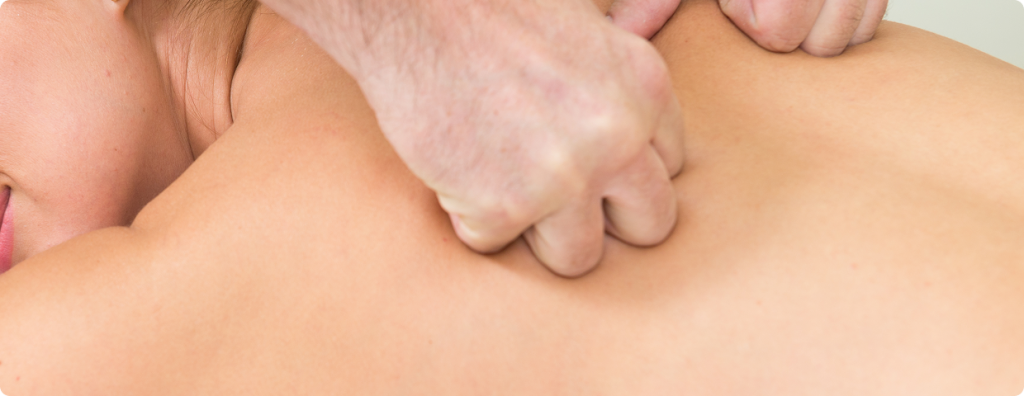
That’s where Myofascial Release (MFR) comes into the picture. It’s a hands-on technique that works directly with the fascia, using slow, sustained pressure to let it soften and unwind. No digging, no white-knuckling, no grinding through the table. Just patience, breath, and trained hands.
If you’re thinking about booking your first Myofascial Release session, and are unsure what it entails, you deserve a clear, honest picture of what you’re walking into.
At Makalani Holistic, I’ve been doing this work for over twenty years, and as someone who works on bodies every day, I have a real perspective on what MFR can do. Let’s walk through what your first session actually looks like.
What Is Myofascial Release?
Myofascial sounds clinical, but the idea behind it is simple. Myo means muscle. Fascia is the thin, web-like connective tissue that runs through every part of your body, wrapping around your muscles, nerves, blood vessels, and bones. It is a fiber-optic system. Light moves through it via the photon cell dissections that have been observed by Dr Jean Claude Gumberteau.
Myofascial Release (MFR) is a hands-on technique that uses slow, sustained pressure to soften and release restrictions in the body’s fascia – the connective tissue web that wraps around your muscles, nerves, blood vessels, and bones.
When fascia is healthy, it’s soft, slippery, and lets everything underneath move freely. When it’s not, it’s usually thanks to trauma, surgery, inflammation, or years of stress that tightens up and creates restrictions that can exert up to 2,000 pounds of pressure per square inch on the structures it’s wrapped around. That pressure shows up as the pain, headaches, stiffness, and restricted movement and acts like a straight jacket on muscles, nerves, and blood vessels. Fascia often doesn’t show up on CT scans or MRIs, which is why so much of this pain gets missed.
How to Prepare For Your First Myofascial Release Session?
A little prep makes a real difference in how much you get out of your first session. Here are some simple steps to prepare for your first MFR session:
-
What to Wear for a Myofascial Release Session?
Loose shorts and a tank top work great. Traditional massage draping is also an option depending on the area we’re working on. MFR is usually performed directly on the skin without oils, as I need to be able to grip the fascia and apply sustained pressure – oil makes that nearly impossible.
-
What to Eat Before a Myofascial Release Session?
A light meal a couple hours before is ideal. Not on an empty stomach, not stuffed.
-
What to Drink Before and After Your Session?
Drink plenty of it before and after. Hydrated fascia softens more easily, and your body clears the release more efficiently afterward.
-
How to Prepare Mentally for a MFR Session?
Yes, your mindset is key. Most people forget to prepare their mind. Be ready to slow down. MFR isn’t a treatment to rush through, and your body responds to it best when you give yourself permission to actually be there.
What Actually Happens During Your Session?
The session starts with a conversation. I’ll ask you where it hurts, what you’ve tried, what your goals are, and any surgeries or injuries that might be connected. This part matters more than people realize – fascia is one continuous web, so releasing tension in one area can bring relief somewhere else entirely.
From there, you’ll get comfortable on the table, and the work begins.
Here’s the part that surprises most first-time clients: I don’t dig, push, or force anything. I use slow, steady pressure that allows your fascia to soften and release naturally. Each stretch is held for 5 to 10 minutes – not a few seconds – because that’s how long fascia actually needs to let go. Anything quicker is just hovering over the surface.
Sometimes I work directly where you feel pain. Other times I follow the pull to another part of your body that’s connected to it. Breathwork is part of the process too. Slow, deep breathing helps the tissue release, and it helps your nervous system understand that it’s safe to let go.
After Your Session
Most people leave feeling looser, lighter, and a little floaty. Some feel it more the next day, the way you sometimes do after a really deep stretch.
A few simple things help your body integrate the work:
- Drink water: Lots of it. When fascia releases, your body has metabolic byproducts to clear out, and water helps that happen.
- Move gently: A walk is wonderful. Skip the intense workout that day.
- Be patient with mild soreness: A day or two of tenderness is normal, it means deep work happened.
People Often Ask
Does Myofascial Release Hurt?
No, MFR shouldn’t be painful. You may feel warmth, a subtle pulling, or a quiet melting sensation as restrictions let go. There’s no force, no sudden movements, no white-knuckling through it. If something genuinely hurts, I want to know – but in twenty years, that’s been the rare exception, not the rule.
Do foam rollers work for myofascial release?
Foam rollers and self-massage tools can give you temporary relief, but they can’t replicate the sustained 5- to 10-minute holds that real fascial release requires. The same goes for poking at trigger points on your own. You might ease the surface tension, but you can’t reach the deeper restriction that’s actually generating the problem. Fascia doesn’t respond to a quick roll. It responds to time, intention, and trained hands.
Can an enlarged lymph node be caused by myofascial massage?
The honest answer is no. MFR actually improves circulation and lymphatic flow, which is part of why people feel so good afterward. That said, if you notice persistent swelling somewhere, that’s worth checking in about. Sometimes Manual Lymphatic Drainage is a better fit, and sometimes a medical referral makes more sense. I’d rather you ask than worry.
Is Myofascial Release the Same as Massage?
The simple answer is no. MFR works with the fascia specifically, holding each stretch for several minutes at a time. I do provide a myofascial release + massage service that has a flowing massage incorporated to help your nervous system fully settle.
At Makalani Holistic, you can book 60, 90, or 120 minutes depending on what your body needs. If you want both deep structural release and full-body relaxation in the same visit, you can also add a one-hour massage to your MFR session – that’s the Myofascial Release & Massage option, and it gives you two full hours of restorative care at a $30 savings.
Why MFR Often Works When Other Things Haven’t?
Most people who end up on my table have already tried a long list of things. Massage. Chiropractic. Stretching apps. Physical therapy. Pain medication. Sometimes years of all of it.
And often, they tell me the same thing, each one helped a little, but nothing really stuck.
There’s a reason for that. The fascial web is usually the missing piece nobody else thought to address. Pain that gets blamed on muscles or joints is often coming from restricted fascia underneath, quietly pulling everything else out of alignment. You can stretch the muscle, adjust the joint, and treat the symptoms all day long, but until the fascia itself softens, the underlying restriction keeps pulling everything back into the same tight pattern.
That’s where MFR earns its place. It works directly with the fascial web muscles where most other treatments don’t reach.
After even one session, many of my clients tell me they breathe more deeply, move more easily, and feel lighter than they have in months. That’s the freedom from invisible tension that MFR is really about.
If your body has been asking for something deeper than another stretch class or another massage, this might be the next thing worth trying. You can learn more about my Myofascial Release sessions in Savannah and book whenever you’re ready. I’ll be there to help you.